Complimentary UK delivery over £50 · Dispatch in 1–2 working days · Glass-bottled in Britain

Auria guide · Beginner to buyer

What is colloidal gold?

A calm UK primer: true colloidal gold versus ionic gold, what the ruby-red colour means, what 40 PPM means, how colloidal gold is made — and what this glass bottle deliberately is not.

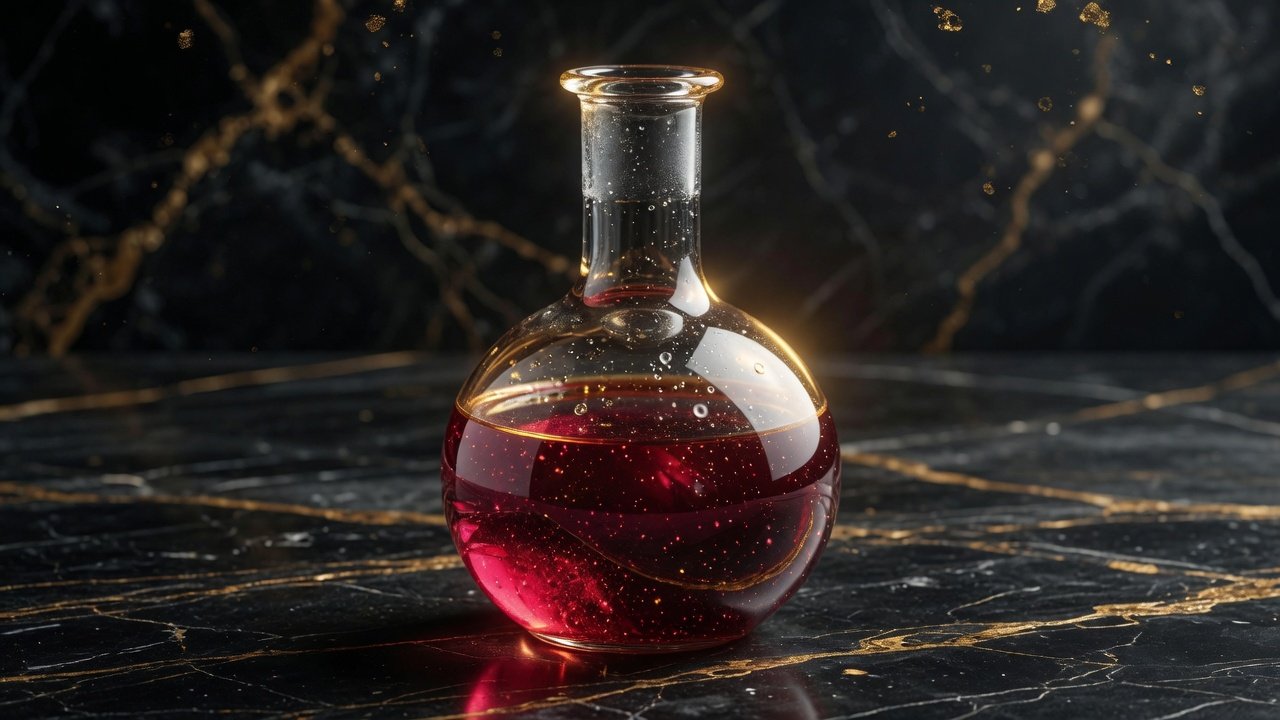
Ruby-red colloidal gold in a clear glass laboratory flask
True colloid · light meeting gold

Definition

A clear, careful definition

Colloidal gold is a stable suspension of extremely small particles of elemental gold in a liquid — almost always purified water. It is not melted jewellery dissolved into a drink, and not a flavoured tonic. It is metal, finely divided and dispersed so the liquid can catch light in ways bulk gold never does.

Depending on particle size, concentration, and lighting, a well-formed gold colloid may appear clear, ruby, purple, or a deeper red. That colour story is optics — not decoration poured from a dye bottle.

Auria Colloidal Gold keeps the formula short: high-purity elemental gold, purified water, formulated at 40 PPM, glass-bottled in Britain. Two ingredients. Nothing else added to lengthen the label. Buy colloidal gold UK · how colloidal gold is made.
Fact

Colloidal gold means suspended gold particles. Ionic gold means dissolved gold ions. They are different forms — see true colloidal gold vs ionic.

The distinction that matters

True colloidal gold vs ionic

Marketing sometimes blurs “gold water” into one category. True colloidal gold and ionic gold are different forms. Start here before you compare prices or PPM numbers — including louder 60 PPM or 120 PPM labels.

Clear water glass beside ruby colloidal gold vessel

True colloidal gold

Elemental gold particles dispersed throughout purified water. Can show a natural ruby hue. Quality depends on purity of inputs, process control, stability, and honesty of labelling — not only a large number on the bottle.

  • Suspended particles (a colloid)
  • Often ruby under good light
  • Short formulas are possible

Ionic gold

Dissolved gold ions in solution — a different chemistry and a different product category. “Gold water” language without clarity can hide which form you are actually buying.

  • Dissolved ions, not a particle colloid
  • Different preparation and behaviour
  • Not what Auria bottles

Auria is positioned as a true colloidal preparation — suspended elemental gold in purified water — not a dye-tinted liquid and not an ionic gold salt solution dressed as luxury.

Light beam through ruby colloidal gold liquid
Optics · not paint

Ruby red colour

Colloidal gold colour meaning — why it can look ruby red

At jewellery scale, gold is yellow. At the nanoscale, gold particles interact with light differently. Electrons on the particle surface can oscillate with incident light — the phenomenon known as surface plasmon resonance — which is why many well-formed gold colloids appear ruby or deep red rather than metallic yellow.

The colour is not a sticker, not food dye, and not flavour. It is light meeting carefully prepared particles. Michael Faraday documented this ruby behaviour in the nineteenth century when he studied “divided gold” — finely dispersed metal in liquid.

Truth card

Ruby colour can be a useful cue of particle behaviour. Colour alone is not a full quality certificate. Ask about inputs, process, concentration, vessel, and what is deliberately left out.

Faraday colloidal gold history → · Colloidal gold history →

Scale

Ultra-fine gold, suspended

A colloid is not a chunk of metal at the bottom of a glass. It is a dispersion fine enough that particles stay suspended — and light can play across them.

Abstract visualisation of gold nanoparticles in suspension

Concentration

What 40 PPM means (and does not)

PPM means parts per million. In colloidal gold it describes concentration — roughly how much gold is present relative to the liquid. Auria is formulated at 40 PPM — a deliberate strength printed clearly for you to read.

Higher PPM is not automatically better. Concentration does not, by itself, describe particle quality, purity of inputs, stability of the suspension, or honesty of the process. Markets that race to the largest figure often skip the more useful questions.

01 Inputs

Gold and water — or a longer list?

02 Form

True colloid or primarily ionic?

03 Number

Clear PPM with units — not only adjectives?

04 Vessel

Glass you can see — and a maker you can ask?

Auria’s choice

40 PPM is a clear standard — not a race. We spend the craft on purity, process, and restraint.

Craft

How Auria is made

Auria follows a controlled electrochemical approach in the Faraday tradition: high-purity elemental gold, purified water, careful process control, and small-batch production in Britain.

The aim is a true colloidal suspension with a natural ruby appearance — not artificial colour, not fillers, not flavour systems. Measurement and consistency matter more than volume theatre.

For the full craft story, read Our process. For the longer arc, see History and Michael Faraday.

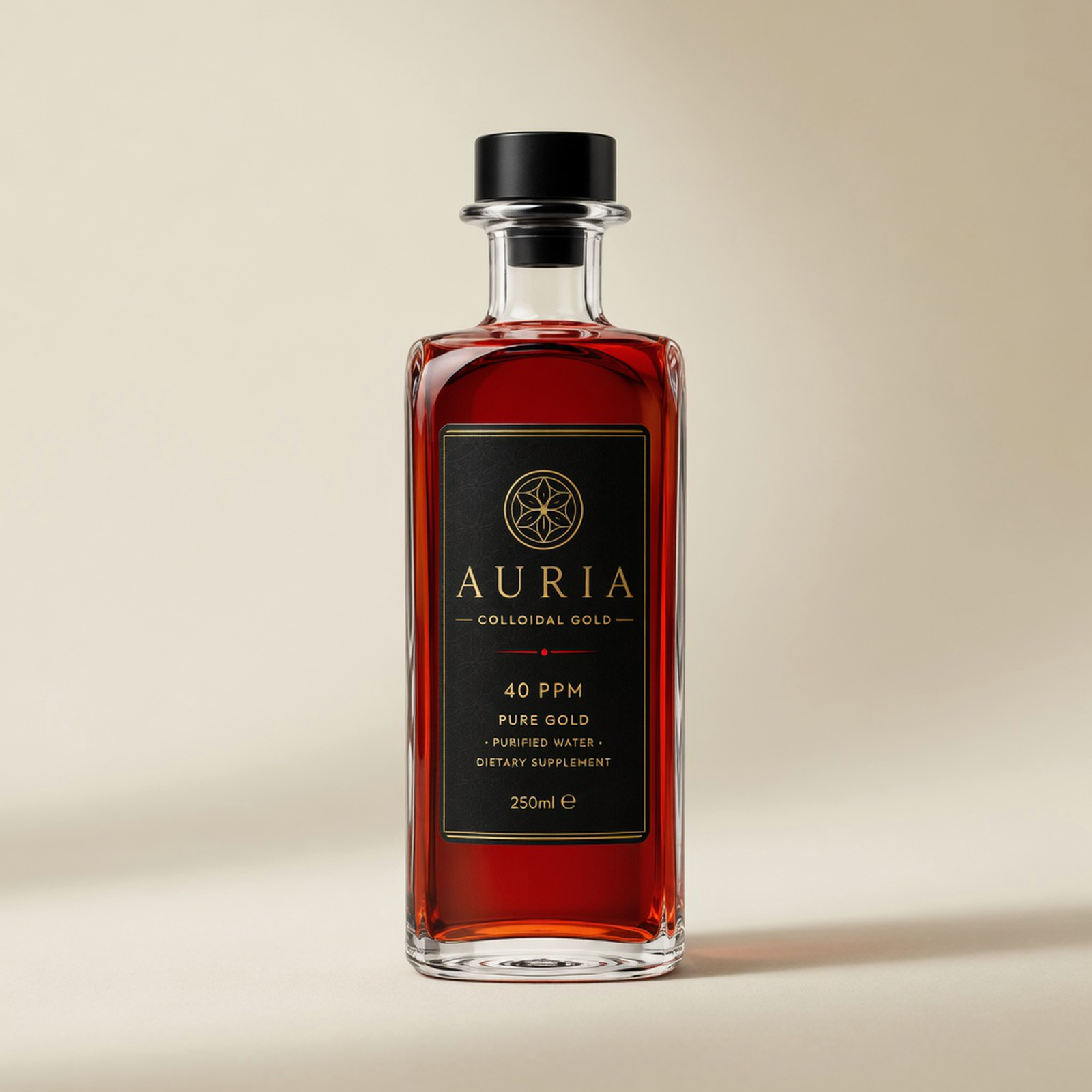
Auria Colloidal Gold bottle
250 ml glass · 40 PPM · Britain
Pouring ruby colloidal gold into a crystal glass
A calm daily pour

Ritual

How people typically use it

A common daily approach is 1–2 teaspoons (5–10 ml), neat or in water or a drink, shaken gently first. Morning or evening — consistency matters more than intensity.

Store cool and dark. Refrigerate after opening. Shake gently before use. Keep the bottle sealed and out of reach of children. Always follow the label on your bottle.

Food supplements should not replace a varied diet or healthy lifestyle. If you are pregnant, breastfeeding, taking medication, or managing a medical condition, speak with a qualified professional before use.

Buying well

How to choose colloidal gold

Use a short checklist. Wonder is welcome; counterfeit wonder is not.

  • Short formula — can you name the ingredients in one breath?
  • Clear form — true colloid, not vague “gold water”.
  • Concentration given with units (PPM), not only marketing adjectives.
  • Glass vessel so you can see the liquid under ordinary light.
  • Process and origin you can read — who makes it, and how.
  • Claims you can trust — process and purity over miracle language.

Auria is

British true colloidal gold at 40 PPM; pure gold and purified water; glass-bottled; short formula; calm brand voice; Faraday-inspired craft.

Auria is not

A medicine; a cure; a stimulant; a substitute for medical care; a miracle list dressed as science; a race to the highest PPM number.

Auria Colloidal Gold

40 PPM · 250 ml · Made in Britain

Auria Colloidal Gold

True colloidal gold — elemental gold in purified water. Natural ruby hue. No dyes, fillers, or flavour systems. A refined daily ritual in glass.

Questions

Short FAQ

Is colloidal gold real gold?

Yes — elemental gold particles suspended in liquid, not gold-plating language and not jewellery melted into a drink.

Is Auria ionic or colloidal?

Auria is positioned as a true colloidal preparation: suspended elemental gold particles in purified water — not primarily ionic gold salts.

Why is it ruby red?

Ultra-fine gold particles interact with light differently from bulk gold. That optical behaviour can produce a natural ruby appearance — not dye.

What does 40 PPM mean?

Parts per million — concentration. Auria is formulated at 40 PPM. Higher is not automatically better; process, purity, and honesty matter too.

How do I use it?

A common approach is 1–2 teaspoons (5–10 ml) daily, neat or in a drink. Shake gently first. Follow the bottle label.

Is this medical advice?

No. This page is educational product context for a food supplement. It is not intended to diagnose, treat, cure, or prevent disease.

More answers on our FAQs page. Essays on craft, colour, and history live in the Journal.

Auria · Colloidal Gold

Short formula. Clear standard.

True colloidal gold at 40 PPM — pure gold and purified water, 250 ml glass, made in Britain.